Resource Recycling Conference - Feb 23-25, 2026
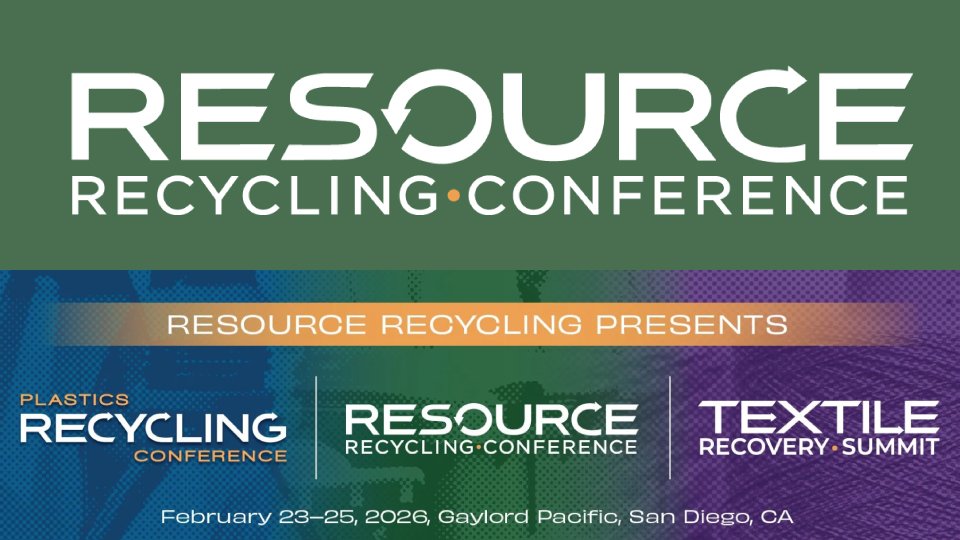
This February 23–25, 2026, the Plastics Recycling Conference, Resource Recycling Conference and Textiles Recovery Summit unite for the first time—creating the ultimate materials management event at the brand-new Gaylord Pacific in San Diego.
Network with 3,000+ leaders from sustainability, policy, procurement, retail, fashion, recycling and government. Explore 250+ exhibitors across 80,000 sq. ft. showcasing cutting-edge recycling tech and circular economy solutions. Gain triple the insights, triple the connections, and a front-row seat to the future of recycling and reuse—all with Pacific views and resort-style amenities as your backdrop.
This is more than a conference—it’s the convergence of industries, ideas and innovation that will define the next era of materials recovery.
The Resource Recycling Conference is the premier event for North America’s municipal recycling community, bringing together professionals and policymakers shaping the future of materials management. SRO participation is especially important to ensure state and local perspectives are part of national conversations. In 2026, the impact is even greater as the conference co-locates with the Plastics Recycling Conference and the Textiles Recovery Summit, giving attendees access to sessions across all three events.
Discount for CRRA Members. Contact Lauren Molinari for discount code.
Attendees also gain access to high-quality, practical educational sessions focused on today’s most pressing challenges, from policy and markets to program innovation. The agenda is designed to deliver actionable insights that help strengthen programs and support informed decision-making across the recycling landscape.
KEY SESSIONS of noted importance:
Responsible End Markets and EPR Compliance: Finding Common Ground: As Extended Producer Responsibility (EPR) laws roll out across the U.S., requirements for “Responsible End Markets” (REMs) are reshaping recycling markets. This interactive workshop brings together state regulators, local governments and industry leaders to unpack compliance challenges, and work toward consensus on standards that balance accountability with market realities.
Local Government’s Role in Textile Recovery With and Without EPR: In this multi-panel workshop, hear about textile recovery options in jurisdictions with and without EPR. Learn how to establish or enhance municipal textile recovery programs through diverse collection methods, successful strategies, partnership opportunities and the evolving landscape of textile diversion, as well as the critical role of local government in implementing California’s textile EPR program.
What Food Waste Programs Can Learn from Recycling Outreach: Join us for an interactive workshop that takes tips from recycling outreach and applies them to food waste reduction and organics collection programs. The rise of food waste reduction and collection programs is a starting-from-scratch education opportunity. Learn from best practice cities and counties and participate in your own food waste campaign activities
Collaborative Resources for Recycling Glass With and Without EPR: This interactive discussion panel explores innovative ideas and resources for supporting recycling initiatives within an EPR framework and without it. Panelists will discuss examples of how glass can be recovered with circular solutions. Attendees will learn how best practices can be implemented in their region and foster collaborative relationships across the recycling value chain to recover more glass and small-format recyclables in MRF glass.
Scaling Reuse in the U.S.: The Next Phase of City-Wide Implementation: Representatives from the multi-brand NextGen Consortium, led by Closed Loop Partners’ Center for the Circular Economy, will speak alongside industry experts to discuss what it takes to implement reuse systems at this scale. Key lessons will be unpacked including what materials work best for reusable packaging, why recycling systems are key to the efficacy of reuse, and the effect of policy on the growth of reuse infrastructure across the country.